
What is Diphtheria?

Diphtheria (diff-theer-e-uh) is a contagious skin and/or throat infection which can make you very sick.

Diphtheria can make you very sick and can even put you in the hospital. It can spread easily between people if it’s not treated.

Aboriginal Elders, young children, and people with chronic health conditions like diabetes, heart disease and kidney disease are at higher risk.

SA Health is working closely with AHCSA and Aboriginal community-controlled health services to make sure mob across South Australia have access to current, culturally appropriate information.

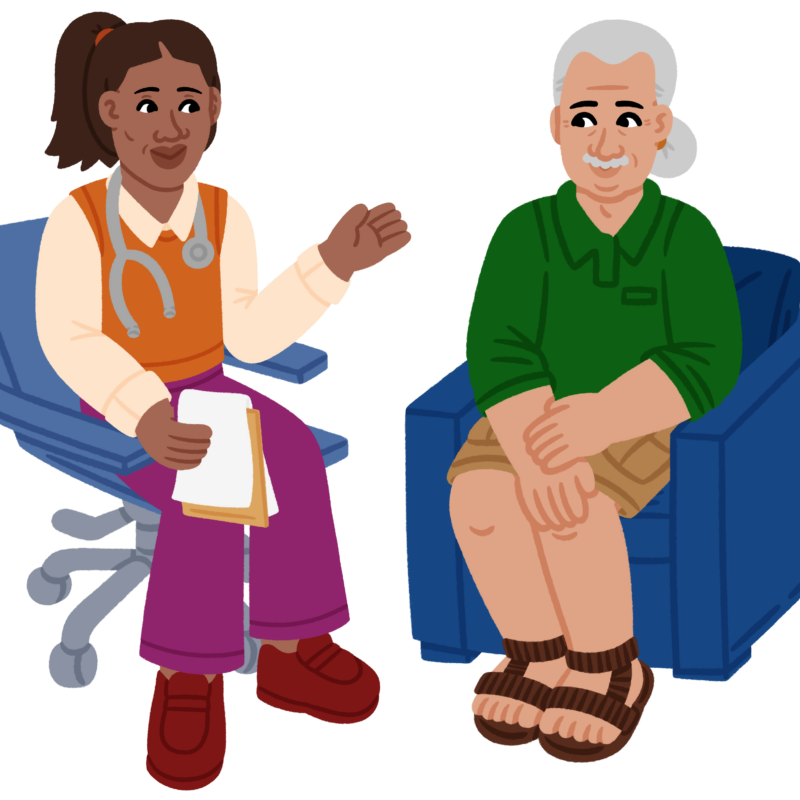
Skin sores or sore throat? Visit your local health service.
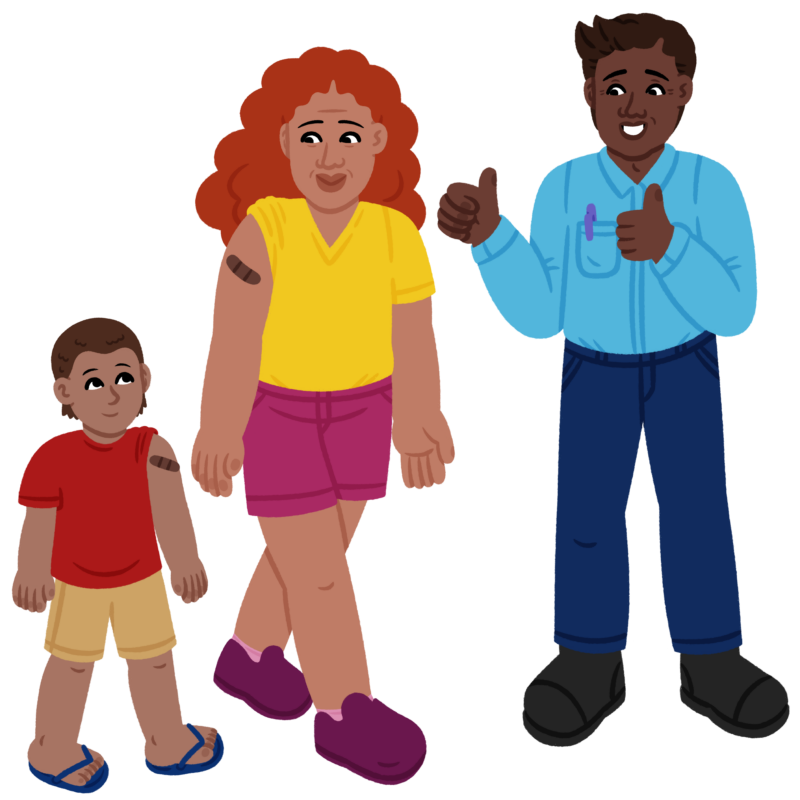
Vaccination is your best protection from getting very sick.

It is important children have all their vaccines as soon as they’re due. Adults are recommended to have a booster if it has been more than 5 years since the last one.

  • Babies and children: make sure all vaccines are up to date
  • Over 10 years old: get a booster if last vaccine was more than 5 years ago
  • Adults: have a booster if it has been more than 5 years since the last one
  • Not sure? Visit your local clinic or ACCHS — they can check for you!

Vaccination can stop diphtheria from making someone very sick.

Know the Signs

There are two types of diphtheria:

Skin (cutaneous) diphtheria — most common type in community right now:

  • Skin sores and ulcers that don’t heal,
  • Can look yellow or grey on top

Throat (respiratory) diphtheria — the most severe type:

  • Sore throat, fever and chills
  • Hard to swallow and breathe
  • Grey-white coating on the throat and tonsils
  • Swollen, painful glands in neck
  • Tiredness, not feeling hungry

If not treated quickly, diphtheria can lead to:

  • Damage to the heart
  • Damage to the nerves causing weakness, choking and difficulty breathing
  • Long stays in hospital
  • Death in severe cases

If you have a bad sore throat or skin sore that is not healing — go straight to the Clinic or Hospital.

Keep Mob Safe

If the clinic tells you could have skin or throat diptheria infection — keep yourself and your mob safe:

  • Diphtheria infection is treated with antibiotics. It is important to take all of your antibiotics every day until they are all finished.
  • Mob staying in your house might also need to take antibiotics to stop them from getting sick too — talk to the clinic
  • Stay at home and don’t go visiting or go to the shops until you have finished your antibiotics
  • If you get sicker or have any troubles with breathing or swallowing, go urgently to the clinic to have a check up again.
  • Once you are better again get a booster vaccine for diphtheria to stop you from getting sick another time.
  • Keep your sores covered and clean
  • If you have a sore throat avoid contact with others — no kissing until you’re better!
  • Keep an eye on your mob at home — check their skin for sores and get them to come see the doctor

If the clinic or public health team has told you that you are a close contact of someone with diphtheria:

  • If you get a skin sore or start to feel a sore throat, go see the clinic straight away
  • Take ALL your antibiotic tablets every day until they are finished — even if you feel well
  • Keep an eye on your mob at home — check their skin for sores and get them to come see the doctor
  • Mob staying in your house might also need to take antibiotics to stop them from getting sick too — talk to the clinic
  • Follow clinic instructions about who can go to school, work and childcare

Vaccination is the best way to keep mob safe.

Stop the Spread

Keep mob safe from diphtheria in community:

  • Cover coughs and sneezes into your elbow
  • Keep wounds clean and covered
  • Clean household items and surfaces
  • Come see the doctor if you have a skin sore or sore throat — don’t wait
  • Keep your sores covered and take all of your antibiotics every day until they are finished
  • Check your mob’s skin for sores and get them to come see the doctor
  • Make sure you and all your family are up to date with diphtheria vaccination

Keep your spirit strong:

  • Dealing with a health scare in your community can be worrying — it is okay to ask for support
  • AHCSA — Every Yarn Matters
  • 13YARN — free 24/7 crisis support for Aboriginal and Torres Strait Islander people: 13 92 76
  • Lifeline: 13 11 14

Where can you get your vaccine?

Use our map to find a vaccination location near you. Vaccines are your best protection against serious illness, helping keep you, your family, and your community healthy. You can get vaccinated at participating clinics and selected pharmacies, making it easier than ever to stay protected. Check your vaccination status regularly and make sure you’re up to date with all recommended vaccines.
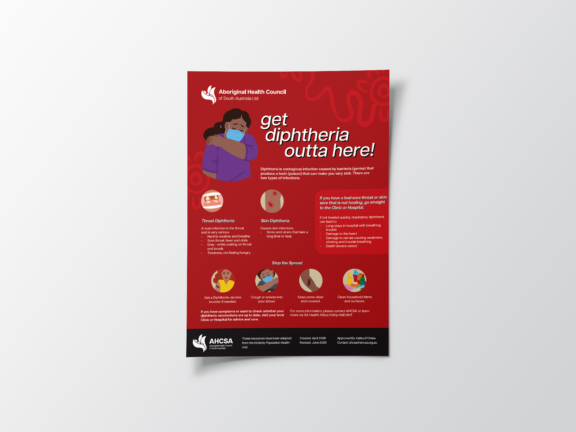
Diphtheria Resources

June 10, 2026

Diphtheria Preparedness Checklist for ACCHO Clinics in SA

A practical checklist to help ACCHO clinics in South Australia prepare for and respond to diphtheria, covering readiness, infection control, and staff actions.
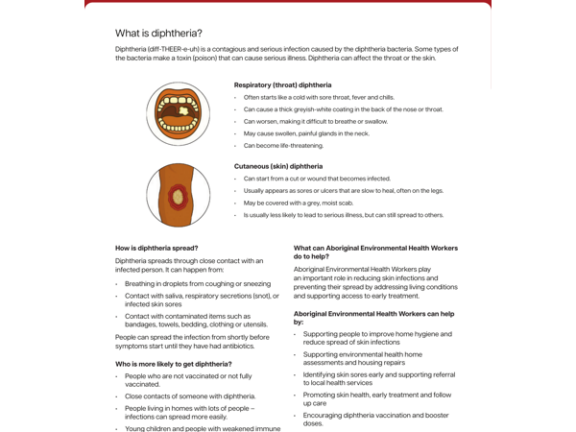
June 10, 2026

Diphtheria Fact Sheet for Aboriginal Environmental Health Workers

A simple guide to diphtheria, including symptoms, spread, prevention, and why vaccination is important.

June 4, 2026

Diphtheria in Australia 2026 – Resource Collection

A collection of resources to support local diphtheria responses from the Australian Centre for Disease Control. Health services, community organisations and media outlets can download, share or adapt these to suit local needs and capacity.

More Information and Advice

Urgent contacts:

  • Emergency: 000
  • SA Health CDCB — report a diphtheria case: 1300 232 272
  • Healthdirect nurse helpline (24 hrs): 1800 022 222
  • 13YARN — 24/7 Aboriginal and Torres Strait Islander crisis support: 13 92 7

If you have a bad sore throat or skin sore that is not healing — go to the Clinic or Hospital.

Notify SA Health immediately for any suspected diphtheria case — do not wait for laboratory confirmation.